
Whole Smoked Turkey (Done Right, Any Time of Year)
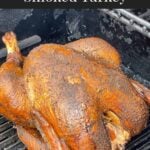
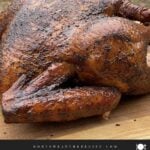
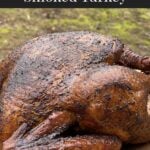
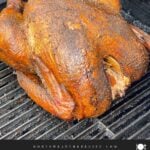
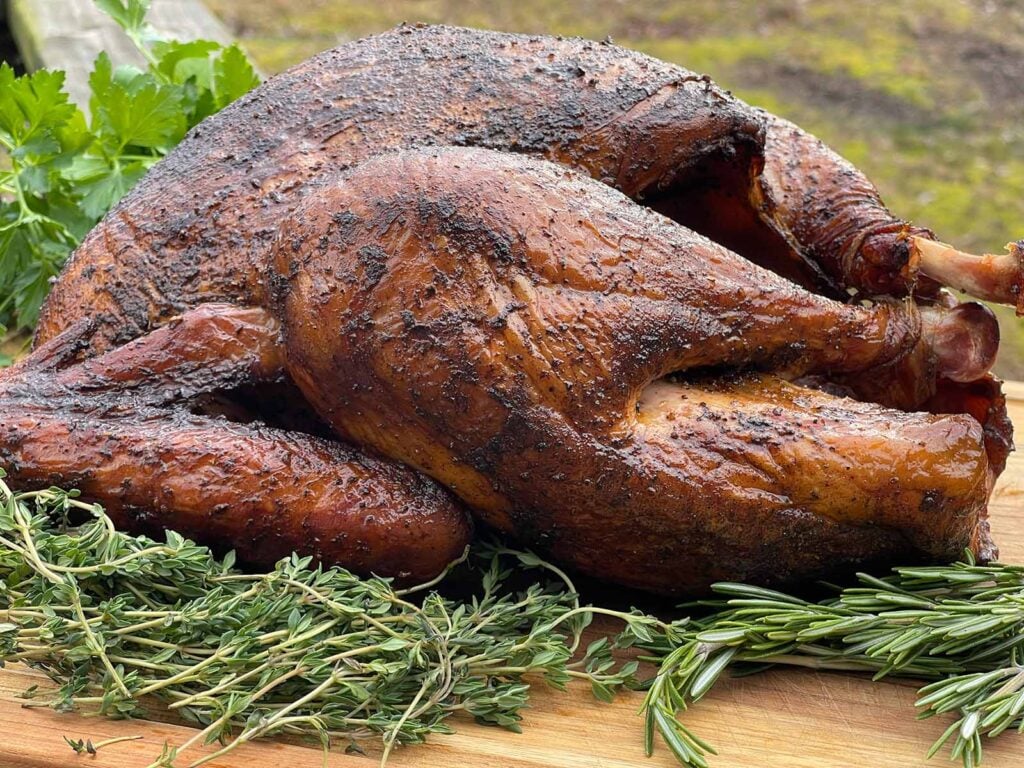
Smoking a whole turkey isn’t a once-a-year obligation; you can do it anytime you like. A properly dry-brined bird cooked over steady smoke delivers juicy breast meat, fully cooked dark meat, and a lot more flexibility than most people expect. It’s a straightforward cook that pays off whether you’re planning ahead or just want great smoked turkey on hand, and who doesn’t?
Why You Will Love This Recipe
This technique delivers a flavor that rivals your favorite BBQ joint. In fact, it beats anything around here. Again, this is why we just do it ourselves.
But the technique is so simple, too. A dry brine of readily available spices and a bit of time will produce the best-tasting, most moist, and tender smoked turkey you will ever have.
Then you can munch down on that smoked goodness however you like. For us, it’s usually a meal starring the turkey. Then we’re breaking it down and using it for sandwiches, and some of the meat will end up in soup (like our Turkey Noodle Soup) or a stew (like our Brunswick Stew). We’ll even save the carcass to make a very tasty turkey stock. No waste, delicious, easy, and sometimes .. if you’re lucky, super cheap!
What is not to like?
How To Smoke A Whole Turkey
Step 1: Thaw the Turkey
Before anything goes on the smoker, the turkey needs to be fully thawed. The easiest way to do that is in the refrigerator. It takes a little planning, but it’s hands-off and reliable.
Plan on about one day of fridge thawing for every 4 to 5 pounds of turkey. A 10-pound bird will usually take 2 to 3 days, while larger turkeys can take closer to a week. Keep the turkey in its original packaging and set it on a rimmed tray or pan to catch any liquid as it thaws.
Once thawed, remove the giblets and neck from the cavity and pat the turkey dry with paper towels. If you like to make gravy later, save those bits—they’re perfect for that. From here, the turkey is ready for the dry brine.
Refrigerator thawing guide
- 8–12 lb turkey: 2–3 days
- 12–16 lb turkey: 3–4 days
- 16–20 lb turkey: 4–5 days
- 20–24 lb turkey: 5–6 days
Step 2: Make the Dry Brine
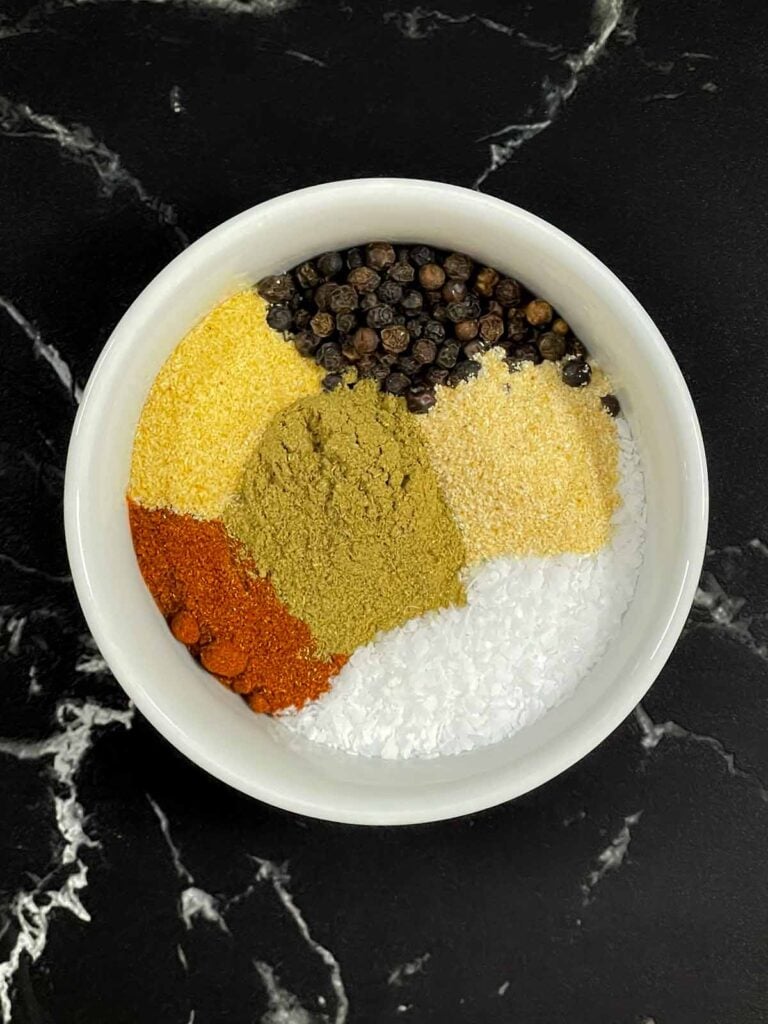
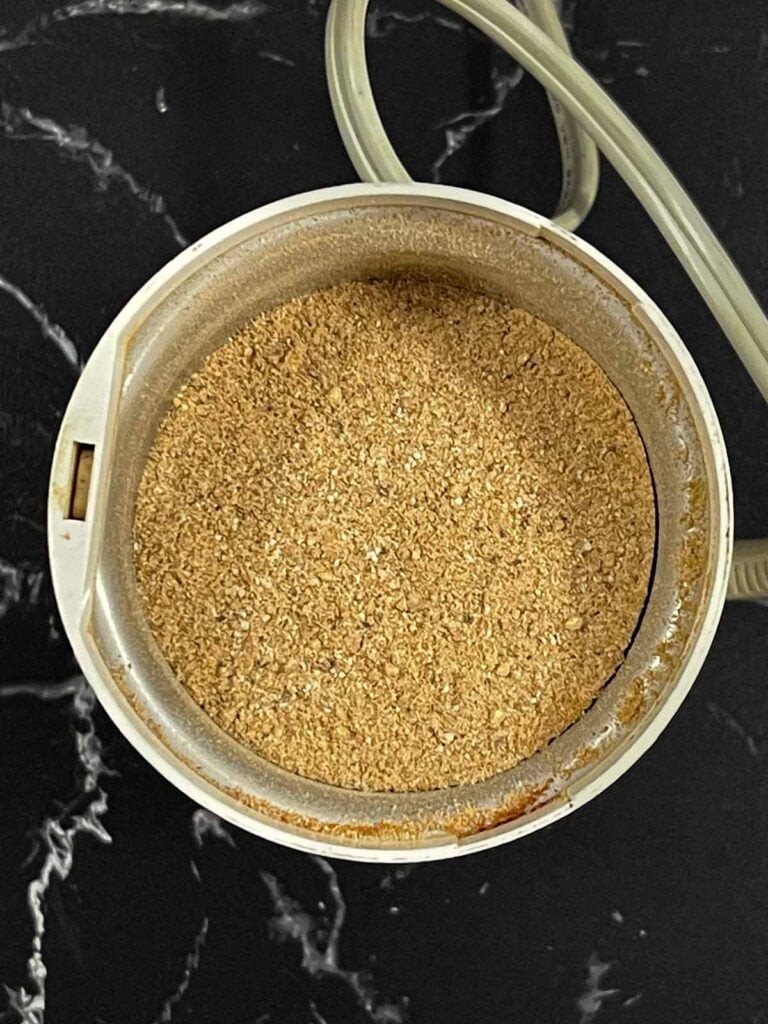
This dry brine is simple and built around classic poultry seasoning, but because it uses whole peppercorns, you’ll want to run it through a spice grinder.
Add the following to a grinder and pulse until everything is well combined and fairly fine:
- 2 tbsp kosher salt
- 1 tbsp black peppercorns
- 1 tbsp paprika
- 2 tsp poultry seasoning
- 1 tsp garlic powder
- 1 tsp onion powder
Grinding the spices gives you a more even blend and helps the seasoning stick to the turkey better.
If you don’t have a spice grinder, you can still make this work. Swap the peppercorns for 1 tablespoon freshly ground black pepper and mix everything together in a bowl. It’s a solid substitution and will still season the turkey really well.
You should really pick up a spice grinder, as it will wake those spices up in all your dishes. Makes a great (cheap) gift, too!
Step 3: Apply the Dry Brine & Rest
Place the thawed turkey on a cutting board and pat it dry one more time. Sprinkle the dry brine evenly over the entire bird, making sure to season all sides.
Some people will tell you to work the seasoning under the skin, especially over the breast. You can do that if you’re short on time, but it’s not necessary if you’re giving the turkey a full 24-hour (or longer) dry brine. With enough time, the salt does its job and seasons the meat just fine from the outside.
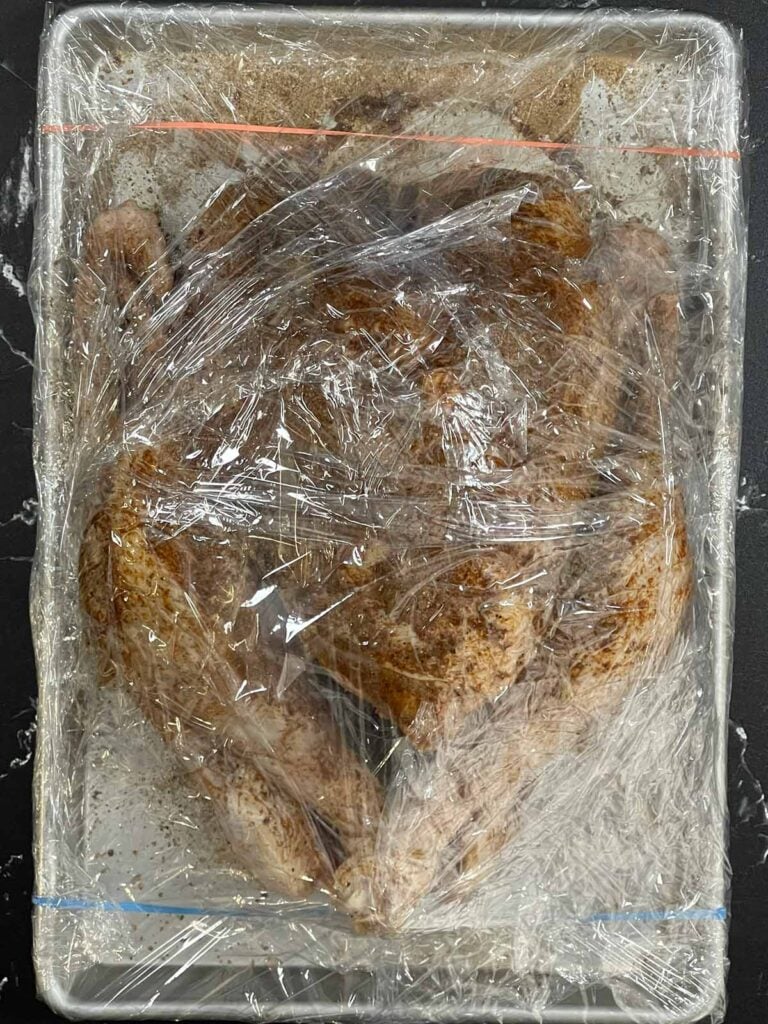
Once the turkey is seasoned, wrap it tightly in plastic wrap and refrigerate it overnight. You can go up to 48 hours if your schedule allows. 24 hours or more gives the brine time to penetrate the meat rather than just sit on the surface. I highly recommend this. It will also ensure the meat comes out insanely moist as the salt reacts with the meat’s proteins (science!).
After the brining time is up, unwrap the turkey and pat it dry. At this point, it’s ready for the overnight air-dry in the fridge, which helps set the skin up for better color on the smoker.
Step 4: Air-Dry the Turkey
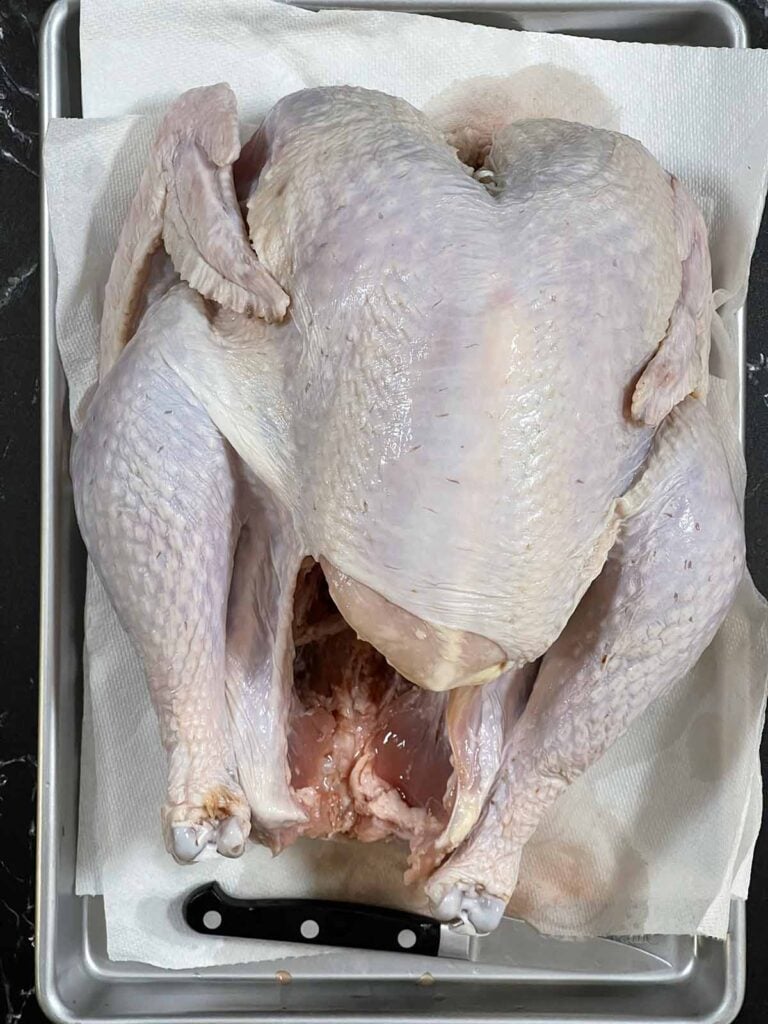
After the dry brine, unwrap the turkey and pat it dry one last time. Set it on a rack over a sheet pan and refrigerate it, uncovered, overnight.
This step lets the skin dry out, which helps it take on smoke and color more evenly on the smoker. It’s simple, it doesn’t require any extra work, and it makes the rest of the cook go more smoothly.
Don’t Sweat The Recipe is supported by its readers. We may earn a commission if you purchase through a link on our site. Learn more.
If your fridge space is tight, just make sure there’s some airflow around the bird and that it’s not pressed up against anything. The goal is dry the skin before it ever hits the heat.
Step 5: On the Smoker
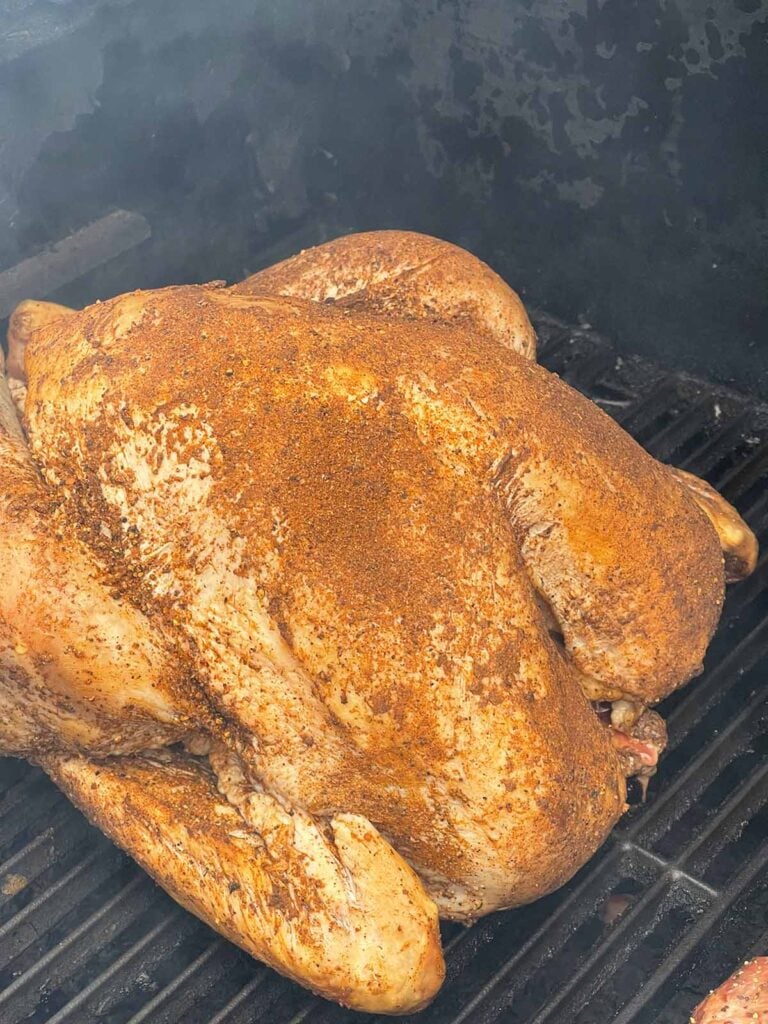
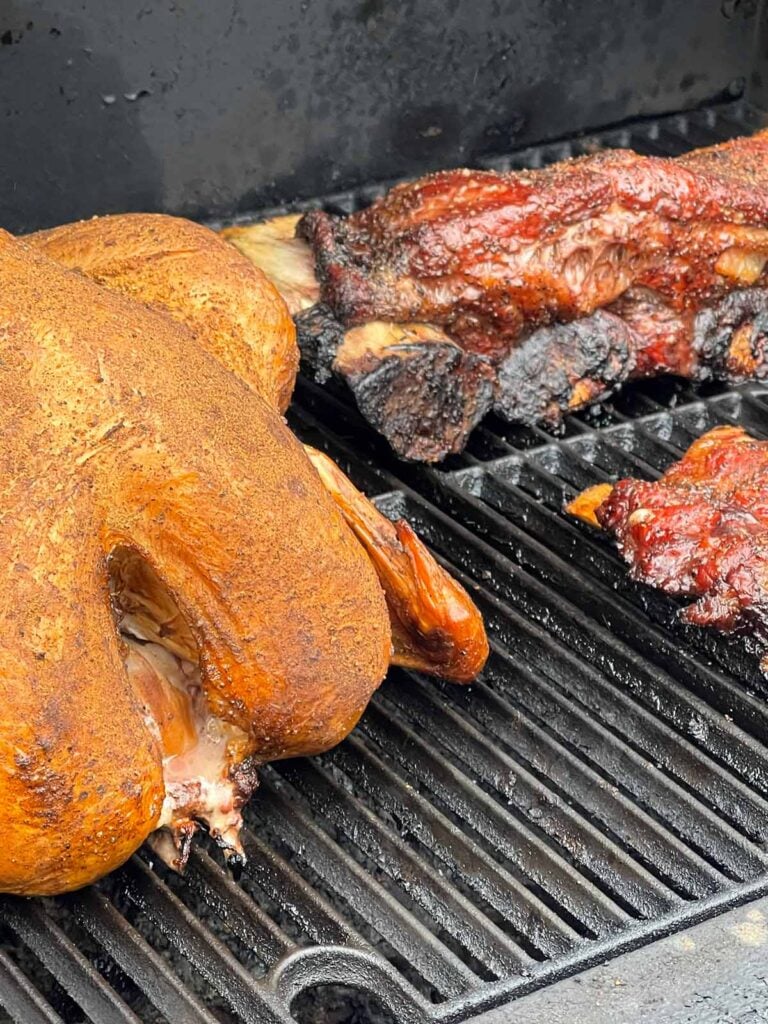
Preheat your smoker to 250°F and set it up for indirect heat. Once the smoker is steady, place the turkey on the grate, breast side up.
As the turkey cooks, pay attention to how it’s positioned relative to the heat. Turkey doesn’t cook evenly on its own, so rotate the bird 90 degrees every 30 to 45 minutes and orient it so the part that needs more heat — usually the thighs — is facing the hotter side of the smoker.
Lightly spritz the turkey with a simple mix of apple cider vinegar and water as it cooks. This isn’t about adding moisture to the meat; it helps keep the surface from drying out too quickly and promotes even color as the smoke does its work.
At 250°F, a whole turkey will take roughly 4 hours for a 10-pound bird, but time is just a guideline. Start watching internal temperatures once you’re a couple hours in and adjust the bird’s position as needed.
This is a steady, relaxed cook. Keep the heat consistent, make small adjustments, and let the smoker do what it’s good at.
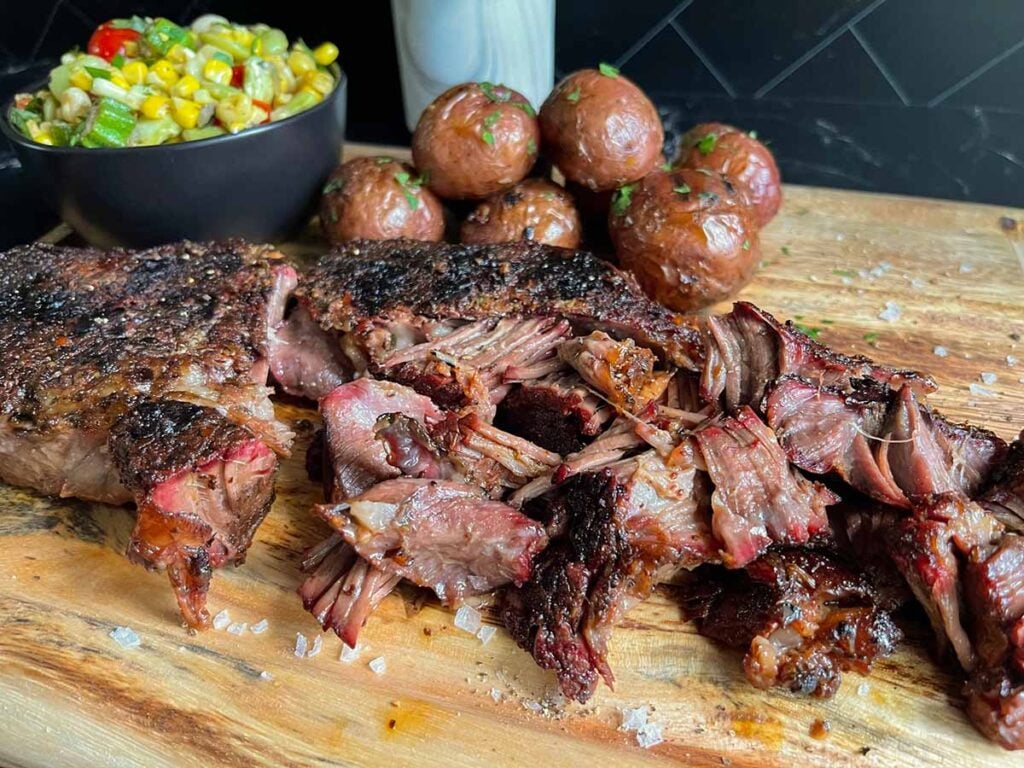
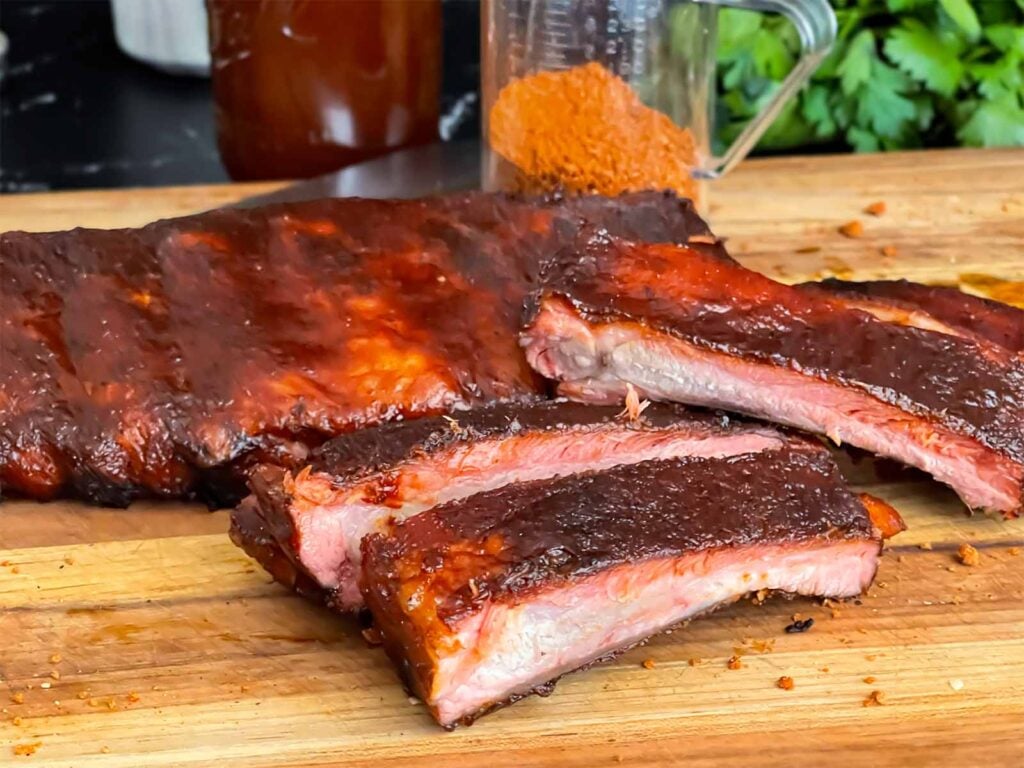
As an aside, if you have room, toss on an extra little meat snack. For this cook I tossed on some beef ribs!
Step 6: Finish & Temperature Targets
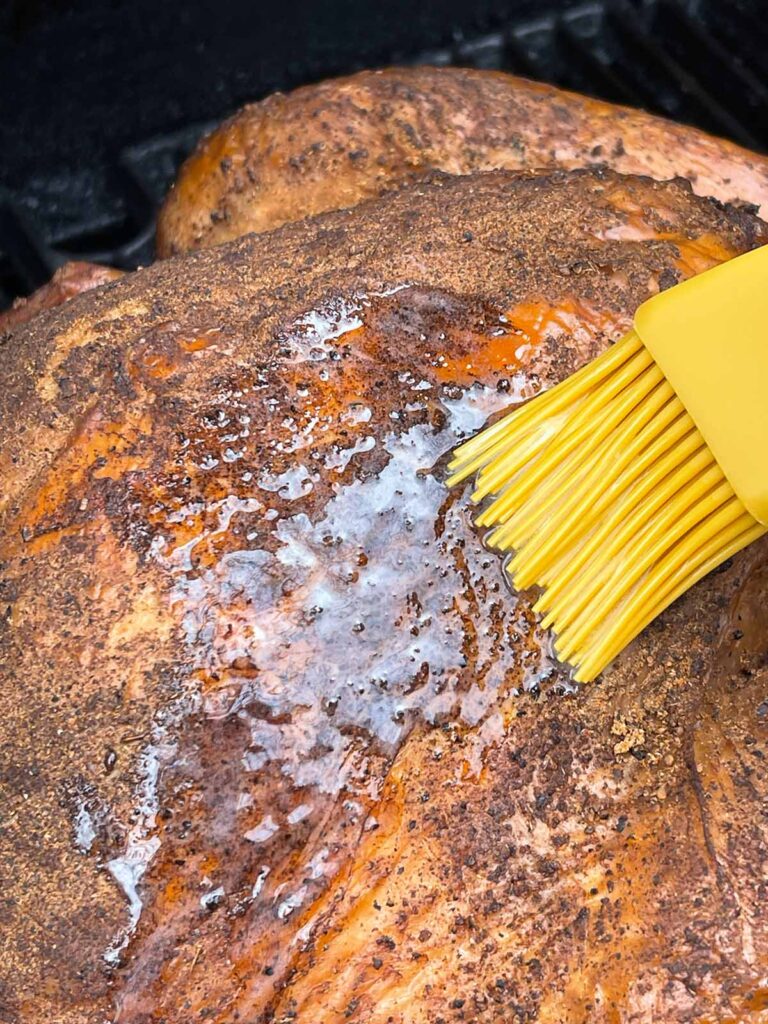
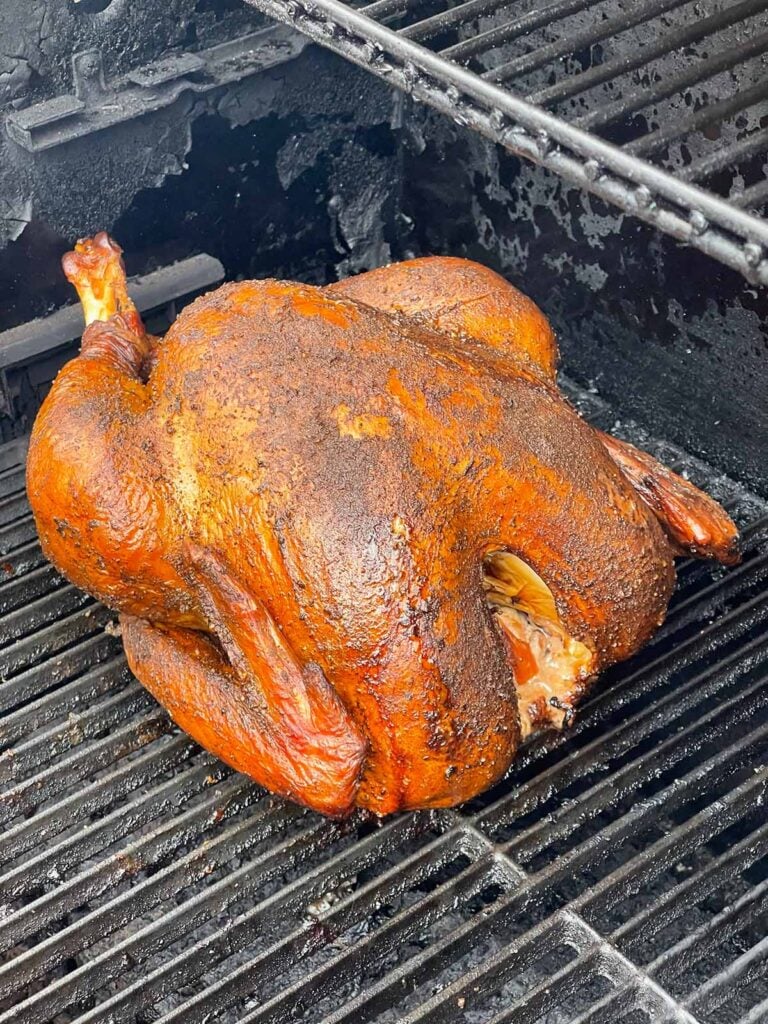
As the turkey gets closer to being done, start watching the internal temperatures more closely. During the last hour to hour and a half, lightly baste the turkey with melted butter once or twice. This helps with color and adds a little richness without masking the smoke.
When the turkey is close — within about 10–15 degrees of your final target — increase the smoker temperature to around 375°F and let the turkey cook at that higher heat for the last 15 to 20 minutes. This blast of heat helps tighten and lightly crisp the skin without overcooking the meat.
You’re looking for two target temperatures (use an instant read thermometer):
- 160°F in the thickest part of the breast
- 170°F in the deepest part of the thigh
Once you hit those numbers, pull the turkey from the smoker. Carryover cooking will finish the job as the bird rests.
If the tips of the legs or wings start taking on too much color during the higher-heat finish, loosely tent them with foil. There’s no need to cover the whole turkey — just protect the spots that need it.
Step 7: Rest the Turkey
Once the turkey comes off the smoker, transfer it to a cutting board and let it rest for about 20 minutes before carving. This gives the juices time to settle back into the meat, rather than running out when you slice.
There’s no need to tent the turkey tightly with foil — just let it sit and relax. After the rest, the turkey will be easier to carve and noticeably juicier.
From here, carve and serve, or let it cool slightly if you’re planning to break it down for leftovers.
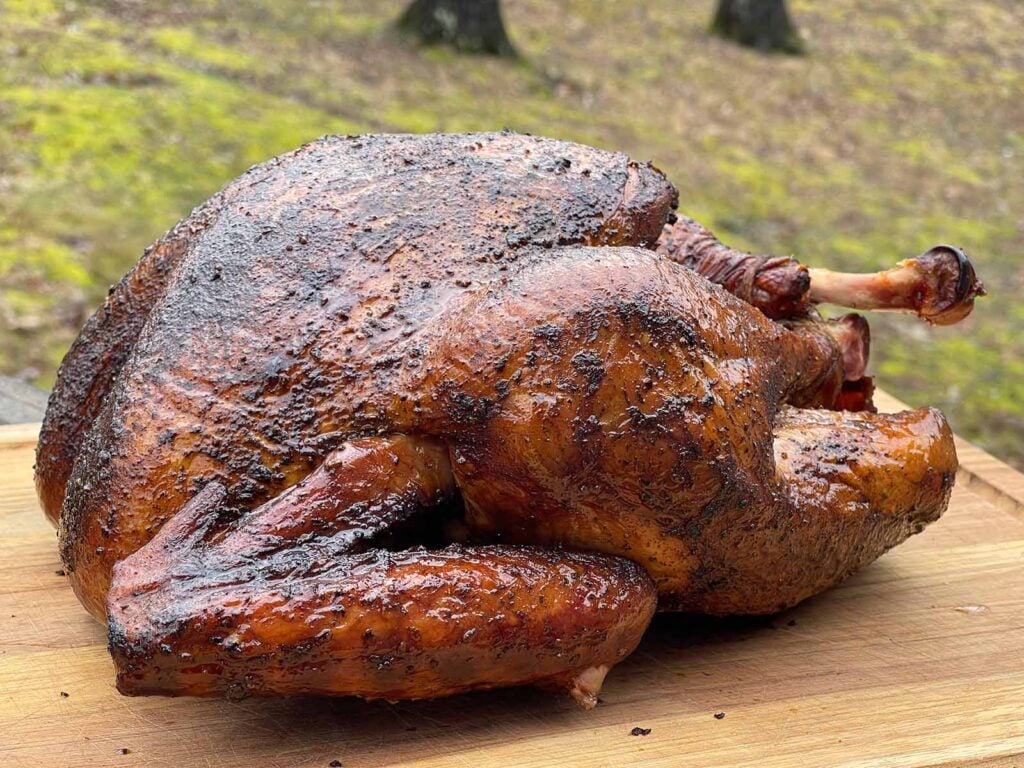
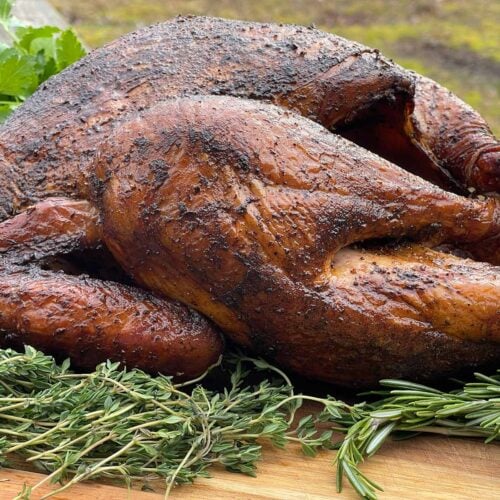
Smoking a whole turkey looks like a holiday project until you realize how useful it really is.
When turkeys dropped to 49¢ a pound at Thanksgiving, we loaded the freezer and turned them into pounds of smoked meat for sandwiches, soups, stock, and whatever else we felt like making.
That’s good food, smart cooking, and a damn good reason to keep turkey in the smoker rotation year-round.
Tips
- Use a light hand with smoke. Turkey takes on smoke quickly. Apple or cherry are easy, forgiving woods; hickory works too if you like a bolder flavor — just don’t overdo it. (I use hickory, but I like an aggressive smoke profile).
- Let temperature, not time, drive the cook. Times vary, so keep an eye on the breast and thigh temps and adjust the bird’s position on the smoker as needed.
- Rotate and reposition the turkey. Turning the bird every 30–45 minutes and facing the darker meat toward the hotter side helps everything finish evenly.
- Protect the thin parts. If the tips of the legs or wings start browning too fast, loosely tent them with foil.
- Finish hot if you want better skin. A short blast of higher heat at the end tightens the skin without drying out the meat.
Variations
- Wood choice: Apple or cherry give a lighter, more forgiving smoke; hickory works well if you prefer a bolder barbecue flavor.
- Herb-forward finish: Add a little extra dried thyme or sage to the dry brine, or finish the turkey with fresh herbs during the rest.
- Spatchcocked turkey: If you want a faster, more even cook, spatchcock the turkey using the same dry brine and smoking setup. (Here’s our smoked spatchcock turkey)
- Skip the hot finish: You can keep the smoker at 250°F the entire cook if you’re not concerned with tightening the skin at the end.
FAQ’s
At 250°F, a whole turkey takes about 4 hours for a 10-pound bird, but time will vary. Always cook to temperature, not the clock.
Start the turkey at 250°F for steady smoke, then increase the heat to around 375°F for the last 15–20 minutes to tighten the skin before pulling it.
Pull the turkey when the breast reaches 160°F and the thigh reaches 170°F. Carryover cooking during the rest will finish it safely.
Yes. Smoked turkey reheats very well and works great for sandwiches, soups, and casseroles later.
Other Smoking Recipes
Ingredients
Dry Brine Ingredients
- 2 tbsp Kosher salt
- 1 tbsp Black peppercorns
- 1 tbsp Paprika
- 2 tsp Poultry seasoning
- 1 tsp Garlic powder
- 1 tsp Onion powder
Turkey
- 1 10 lb Turkey not pre-brined
Instructions
- Thaw the turkey completely in the refrigerator (about 1 day per 4–5 pounds). Remove giblets and neck; pat dry.1 10 lb Turkey
- Make the dry brine by grinding together the salt, peppercorns, paprika, poultry seasoning, garlic powder, and onion powder until well combined.2 tbsp Kosher salt, 1 tbsp Black peppercorns, 1 tbsp Paprika, 2 tsp Poultry seasoning, 1 tsp Garlic powder, 1 tsp Onion powder
- Season the turkey evenly on all sides with the dry brine. Wrap tightly in plastic wrap and refrigerate for 24–48 hours.
- Air-dry the turkey by unwrapping it, patting it dry, and refrigerating uncovered on a rack overnight.
- Preheat the smoker to 250°F for indirect heat. Place the turkey on the grate, breast side up.
- Smoke the turkey, rotating it 90 degrees every 30–45 minutes and positioning the bird so the thighs face the hotter side of the smoker. Lightly spritz with an apple cider vinegar and water mixture as needed.
- Baste with butter once or twice during the last hour to hour and a half of cooking.
- When the turkey is within 10–15°F of being done, increase the smoker temperature to 375°F and cook for 15–20 minutes to tighten and lightly crisp the skin.
- Remove the turkey when the breast reaches 160°F and the thigh reaches 170°F. Tent leg or wing tips with foil if needed.
- Rest the turkey for 20 minutes before carving.
Notes
- Storage: Refrigerate leftover smoked turkey in an airtight container for up to 4 days.
- Freezing: Smoked turkey freezes very well. Portion the meat, wrap tightly, and freeze for up to 3 months.
- Reheating: Gently reheat to avoid drying it out. A covered skillet, low oven, or a splash of broth works well.
- Use the carcass: Don’t toss it — the smoked bones make excellent stock for soups and sauces.
Amazing!