
Smoked Boneless Pork Butt
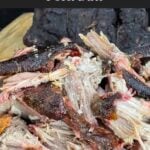
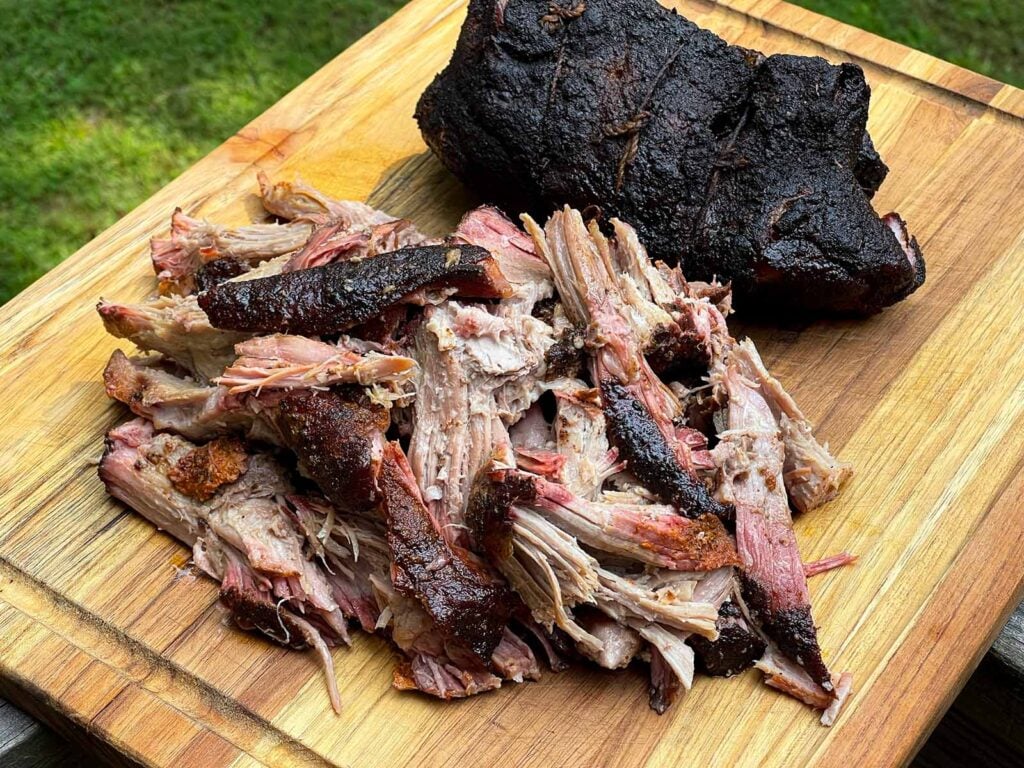
Smoking a boneless pork butt is one of the easiest ways to make tender, juicy pulled pork at home, and cutting it into two smaller pieces makes it even better. Not only does it cook several hours faster than leaving it whole, but you also end up with more flavorful bark in every bite.
Why You Will Love This Recipe
Smoking a boneless pork butt this way isn’t just easier – it gives you tender pulled pork with incredible bark in less time. Cutting it into two smaller pieces creates more surface area for smoke and seasoning while making the pork easier to handle from prep to serving.
- Simple enough for beginners but delivers barbecue-worthy results.
- More flavorful bark thanks to the extra surface area.
- Cooks several hours faster than smoking one large butt (pork shoulder).
- Easy to cut and prepare with no bone to work around.
- Perfect for pulled pork sandwiches, sliders, tacos, nachos, and more.
- Great for meal prep and freezes beautifully.
Ingredients Needed
You only need a handful of ingredients to make incredible smoked pulled pork. We use our homemade BBQ Rub because it’s a recipe we’ve been making for years, and it always delivers great flavor and beautiful bark. Feel free to use your favorite pork rub, but if you’re looking for a tried-and-true blend, we highly recommend giving ours a try.
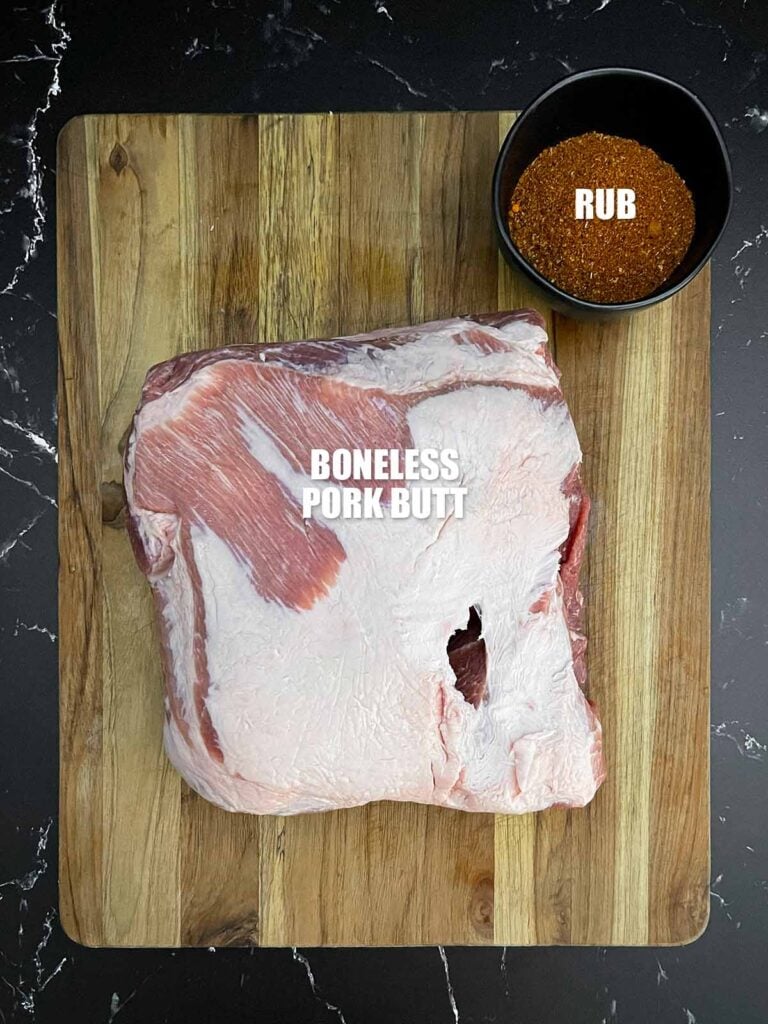
- Boneless pork butt – We cut one large boneless pork butt into two smaller pieces for faster cooking and more bark.
- Yellow mustard (optional) – Acts as a binder to help the seasoning stick. You won’t taste it in the finished pork.
- BBQ rub – Use your favorite pork rub or our homemade BBQ Rub (in the recipe card) for a savory, smoky crust that’s perfect for pulled pork.
- Butcher’s twine (optional) – Helpful if one of the pork halves unfolds after cutting, creating a more uniform shape for even cooking.
- Pink butcher paper – Used to wrap the pork once the bark has developed, helping retain moisture while protecting the bark during the remainder of the cook.
Don’t Sweat The Recipe is supported by its readers. We may earn a commission if you purchase through a link on our site. Learn more.
How to Cut and Prepare a Boneless Pork Butt
Preparing a boneless pork butt couldn’t be much easier. Since there’s no bone to work around, you can quickly cut it into two smaller pieces, giving you more surface area for seasoning and bark while helping the pork cook faster. Once it’s cut, all that’s left is adding a binder and your favorite BBQ rub before it heads to the smoker.
Step 1: Trim and Cut the Pork Butt
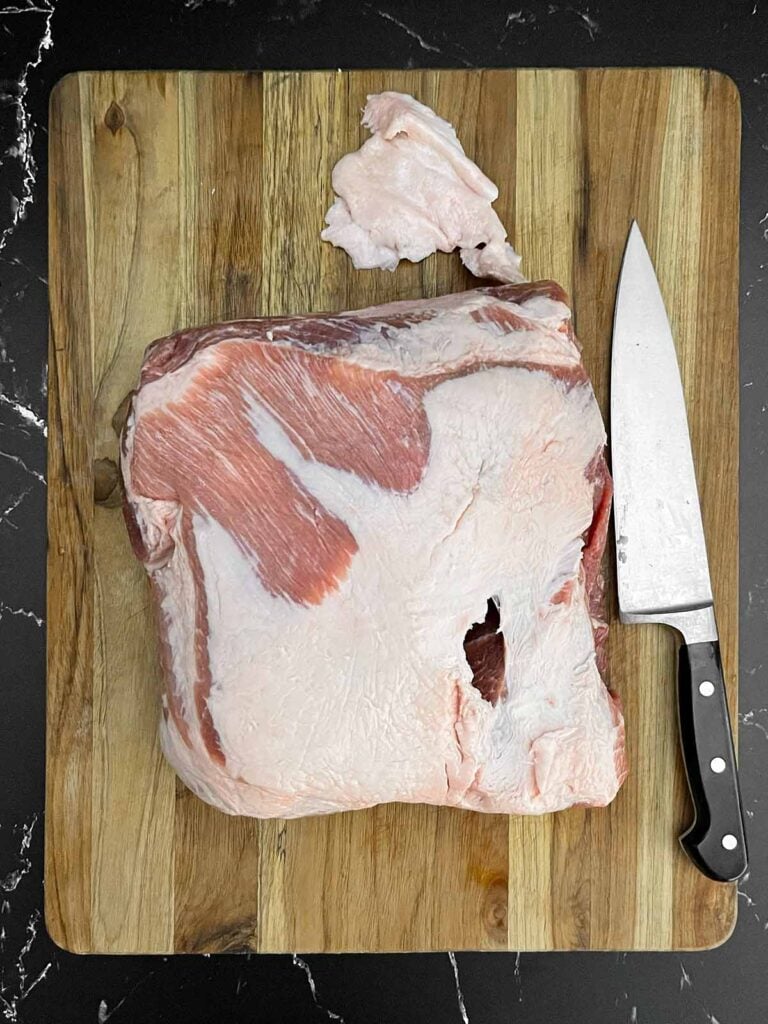
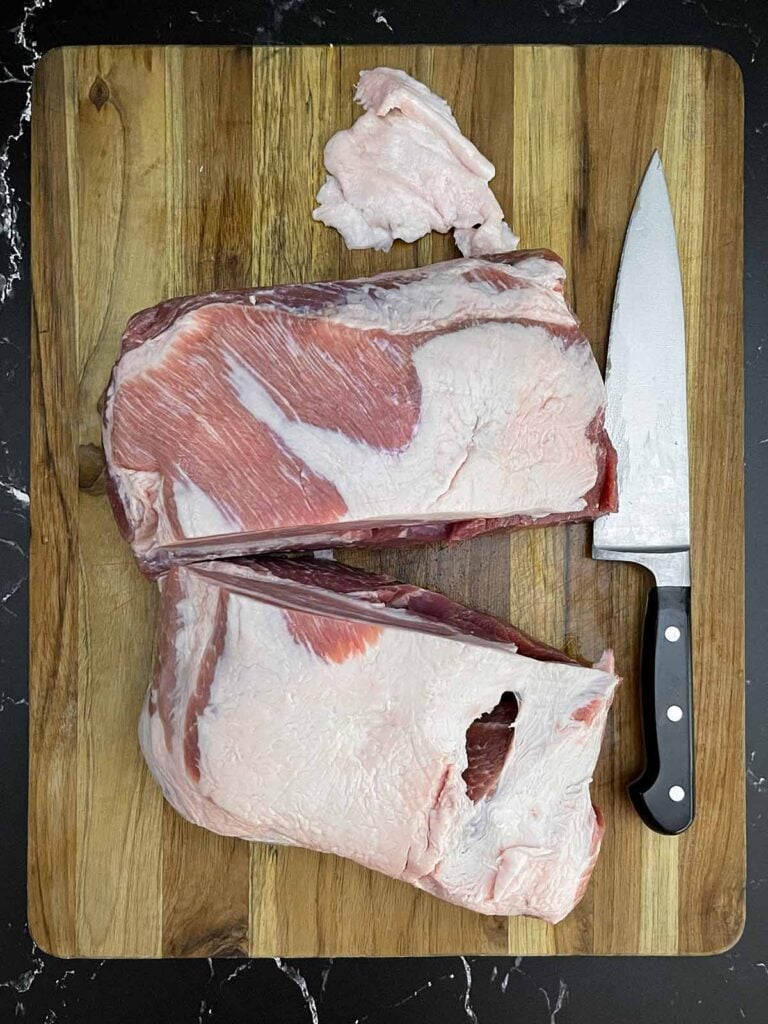
Remove the pork butt from the packaging and pat it dry with paper towels. Trim away any loose pieces or thick pockets of excess fat, but leave most of the fat cap intact. Using a sharp chef’s knife, cut the boneless pork butt into two evenly sized pieces. If one piece unfolds a bit after cutting, that’s perfectly normal.
Step 2: Apply the Binder and Seasoning
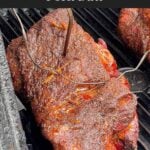
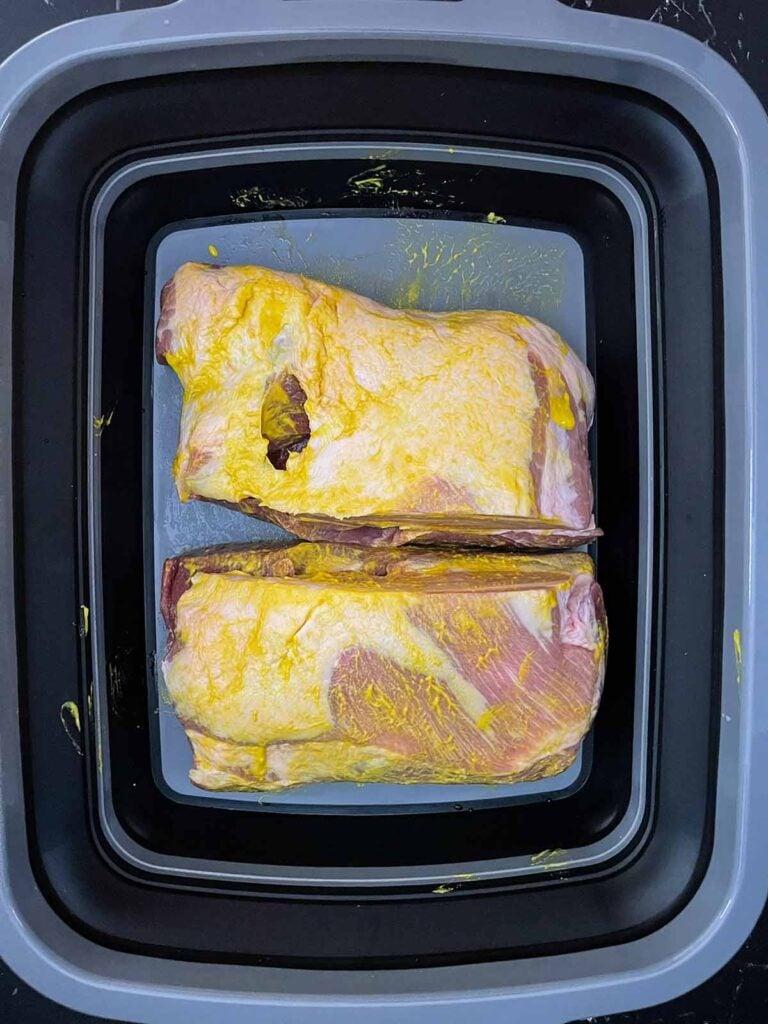
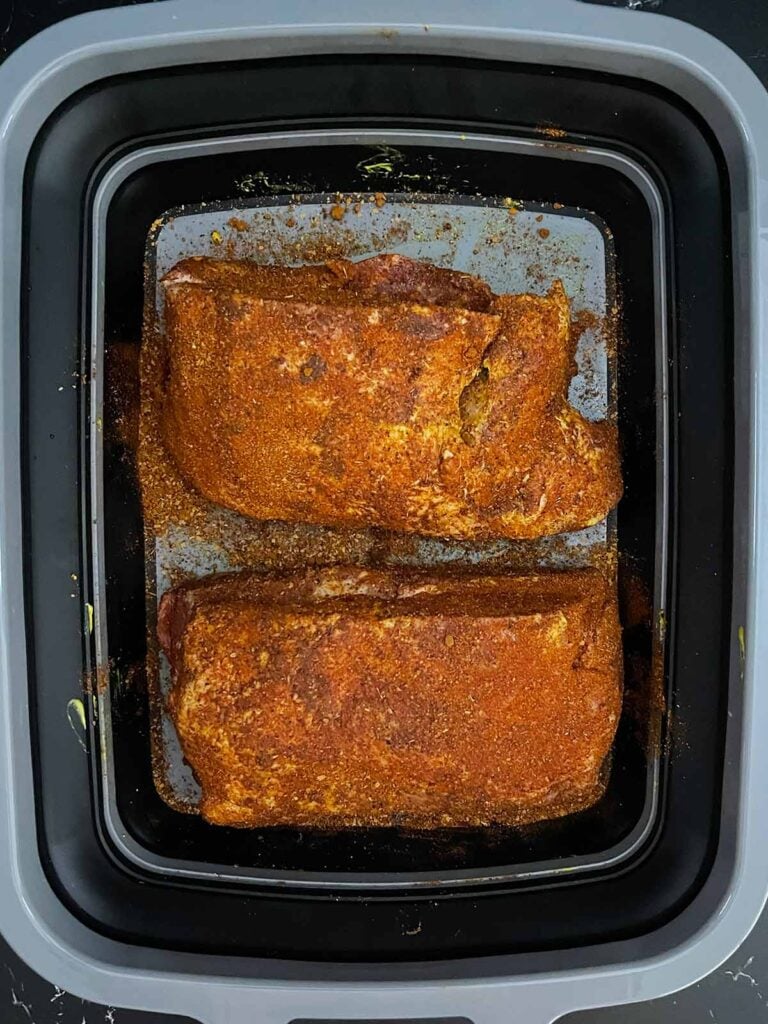
Coat each roast with a thin layer of yellow mustard, then generously season all sides with your favorite BBQ rub. We use our homemade BBQ Rub because it’s a blend we’ve relied on for years, but any quality pork rub will work. If one roast has an uneven shape, tie it with butcher’s twine to help it cook more evenly. Let the seasoned pork rest while your smoker comes up to temperature.
How To Smoke Boneless Pork Butt
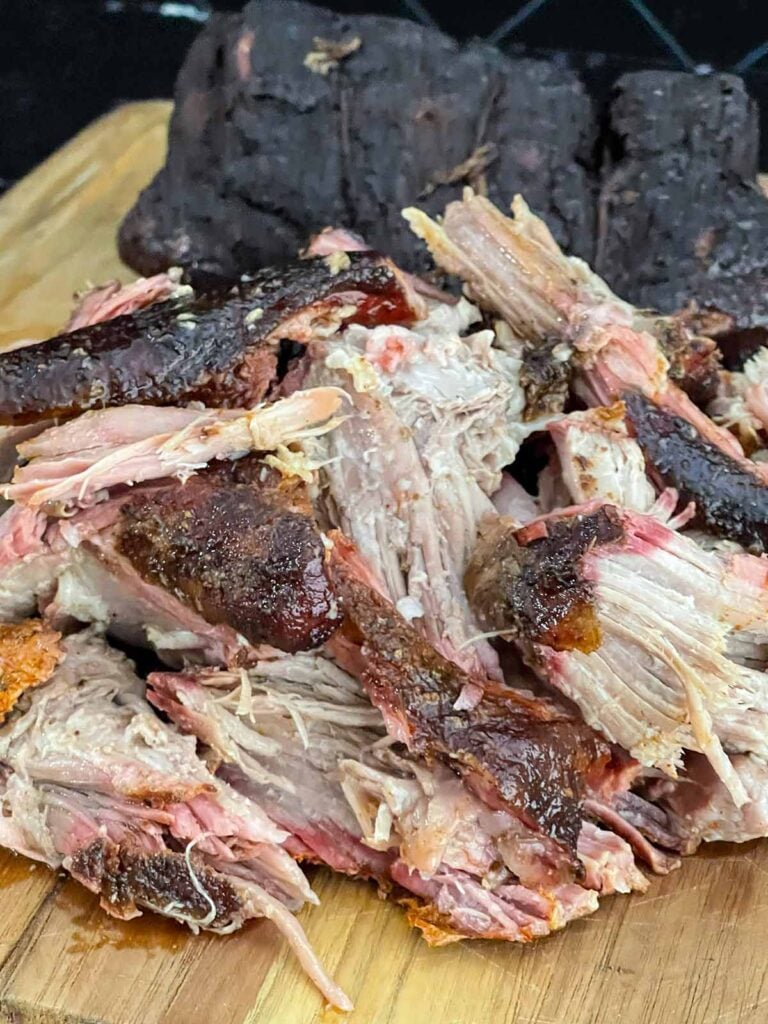
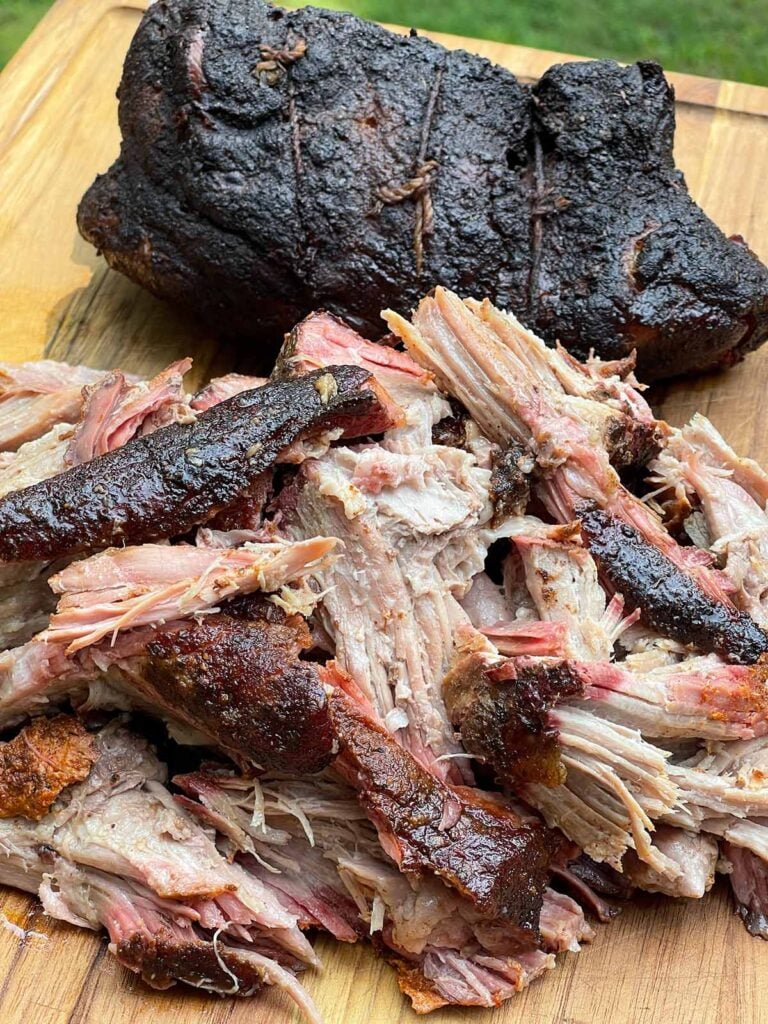
Once the pork is seasoned, it’s time to let the smoker do the work. We smoked these boneless pork butt halves at 250°F, letting the bark develop before wrapping them in pink butcher paper to finish cooking. The result was tender, juicy pulled pork with plenty of smoky flavor and a beautiful crust.
Step 1: Smoke the Pork
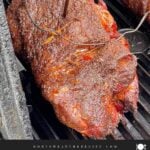
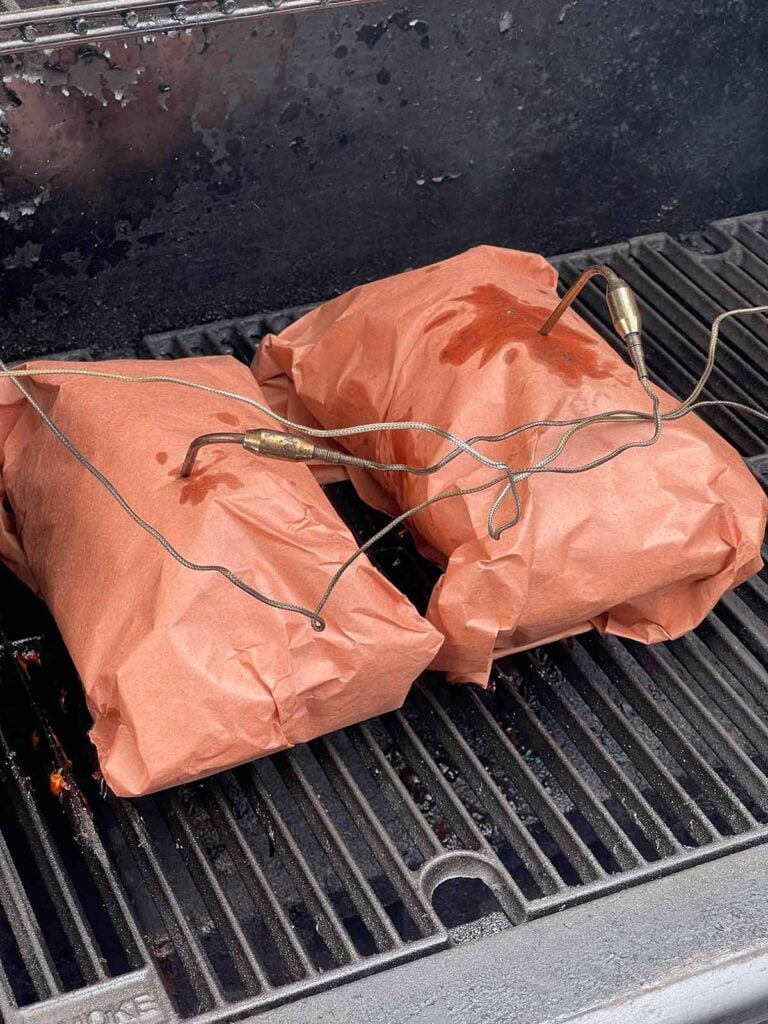
Preheat your smoker to 250°F and place the pork directly on the grates. Insert a temperature probe into the thickest part of each roast, avoiding large pockets of fat. Close the lid and let the smoker do its job. After a couple of hours, you’ll start to see the bark forming and the color deepen.
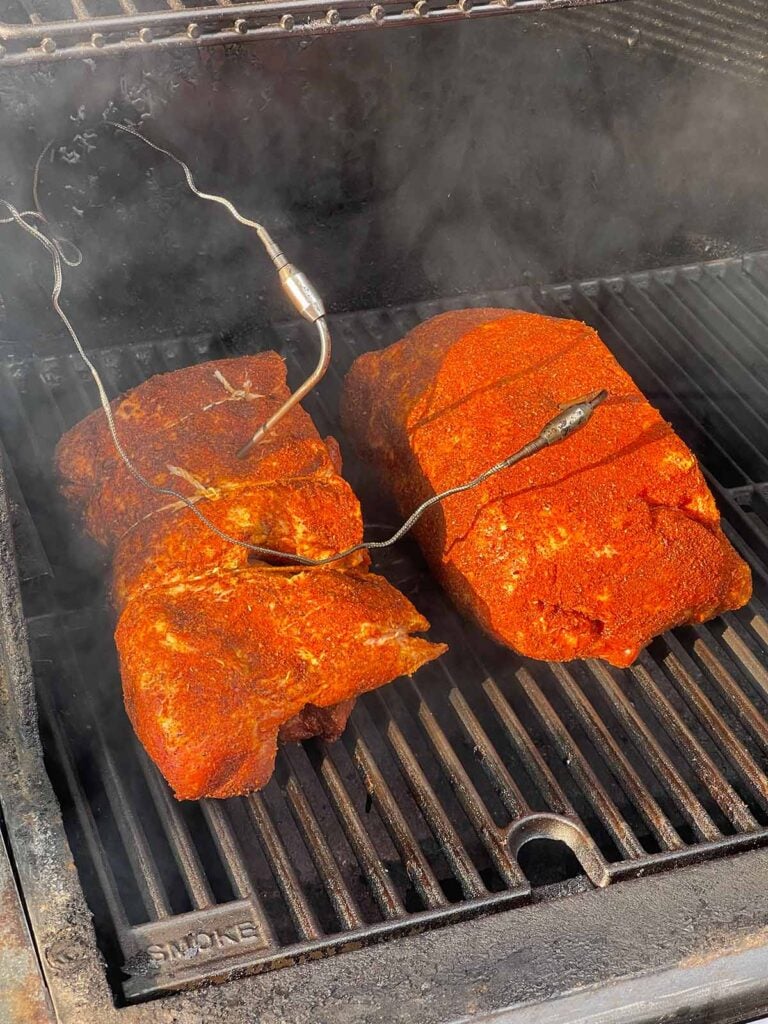
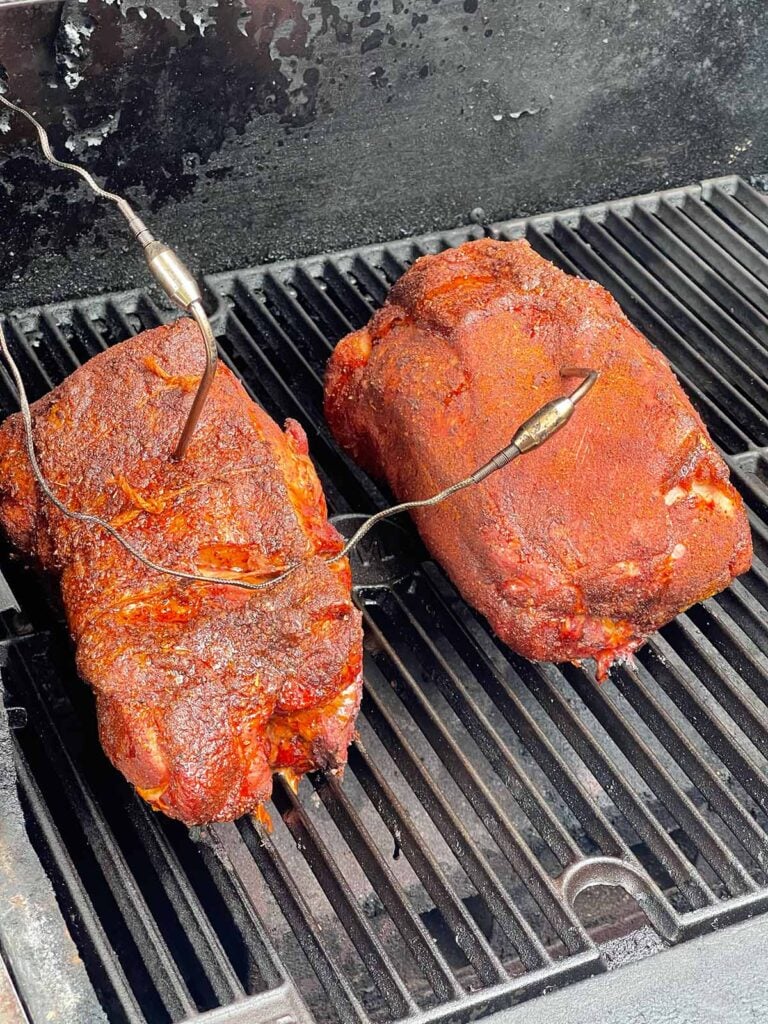
Step 2: Build the Bark
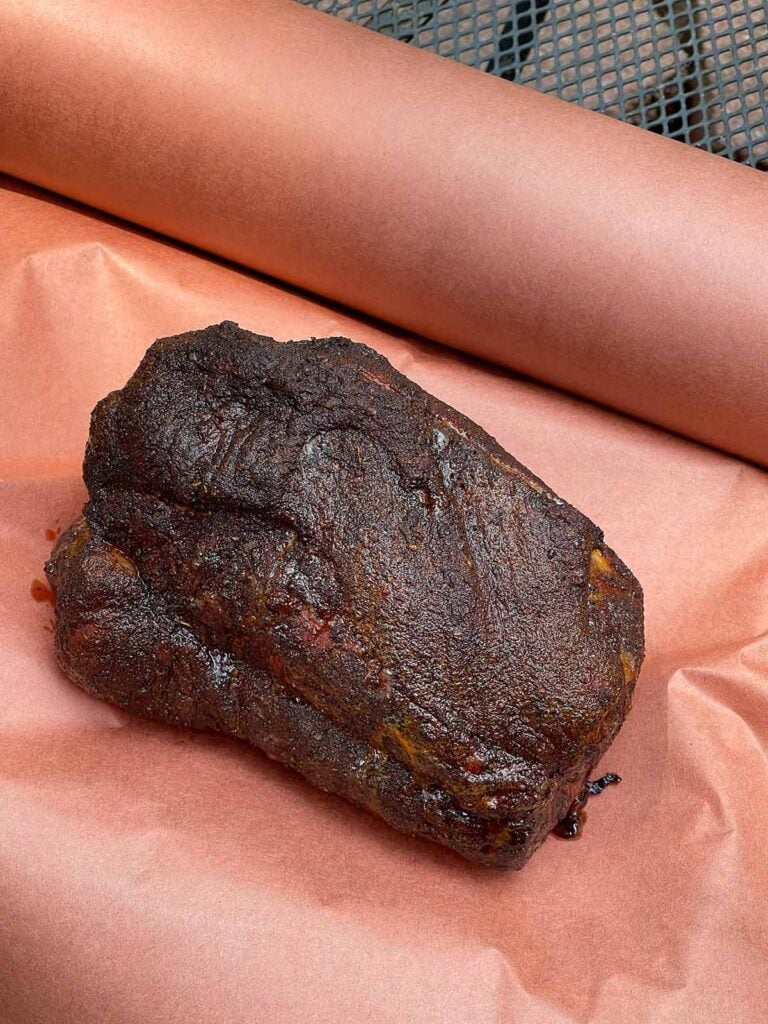
Continue smoking until the bark develops a rich, deep mahogany color. Resist the urge to wrap too early—the bark should look dry and well set before moving on to the next step. For ours, it took about five hours.
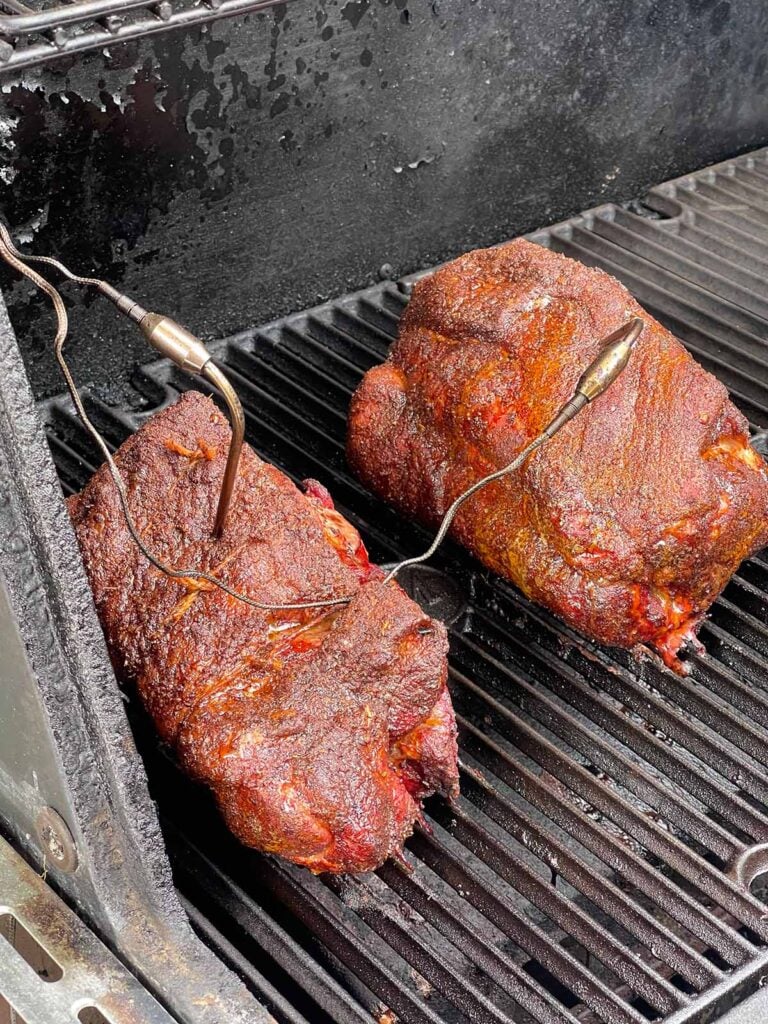
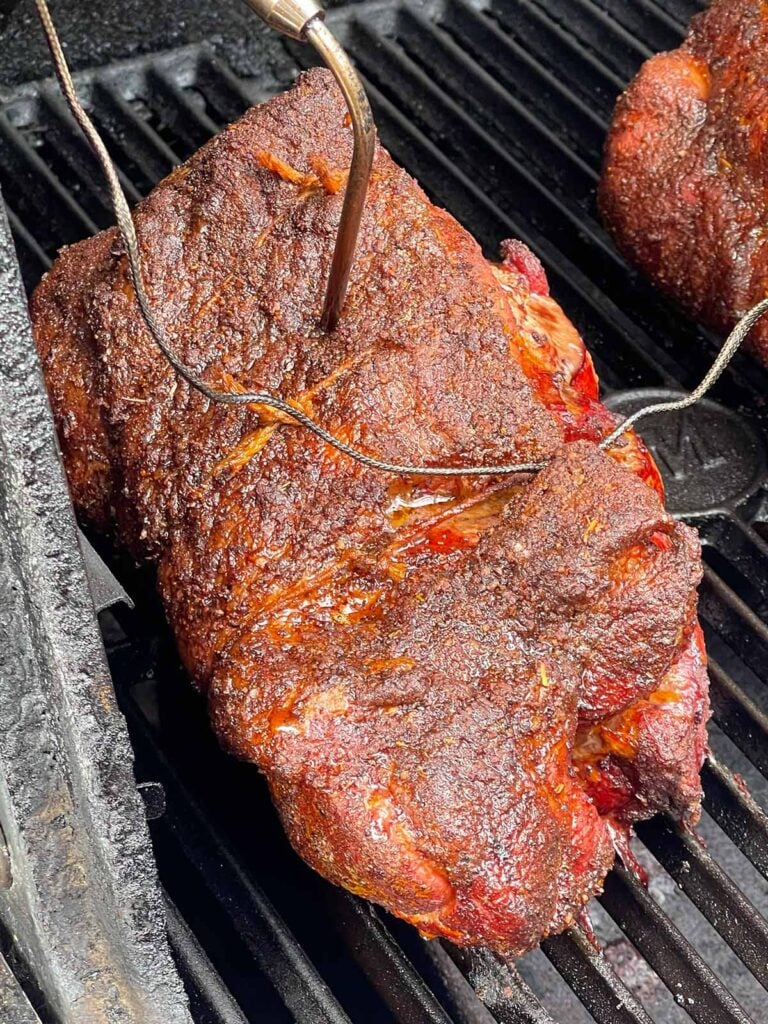
Step 3: Wrap and Finish
Once the bark is where you want it, wrap each roast tightly in pink butcher paper and return them to the smoker. Reinsert the temperature probes and continue cooking until the pork is probe tender. Start checking around 200°F, but don’t rely on temperature alone—the probe should slide into the meat with very little resistance.
Step 4: Rest and Pull
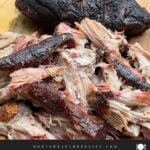
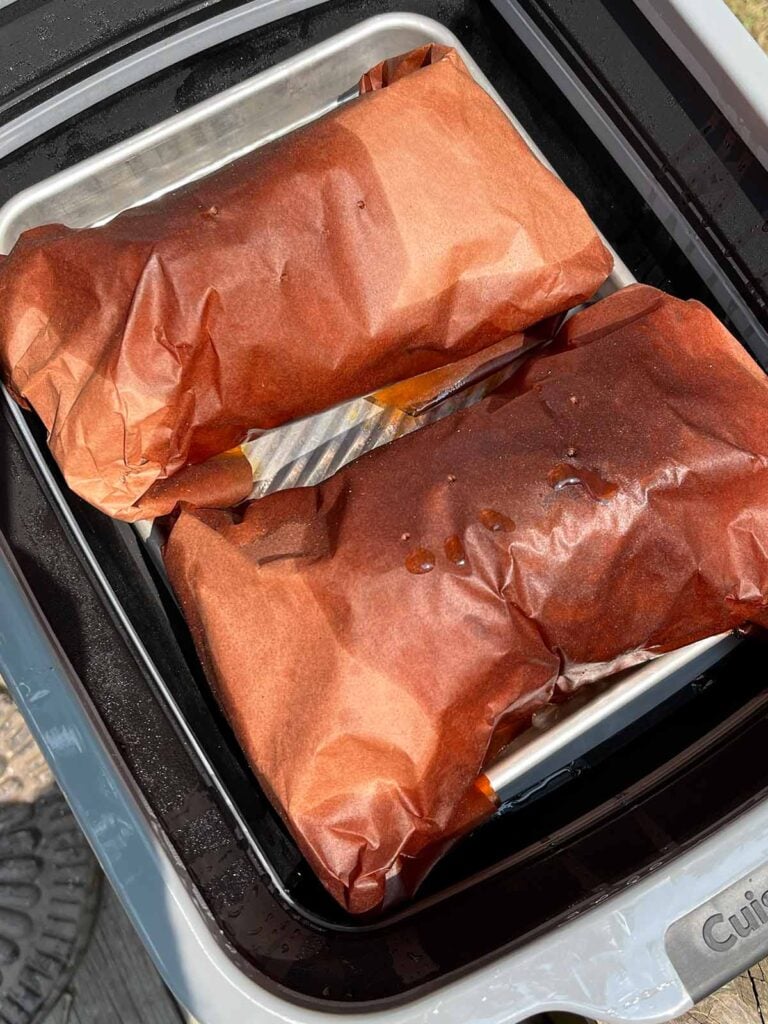
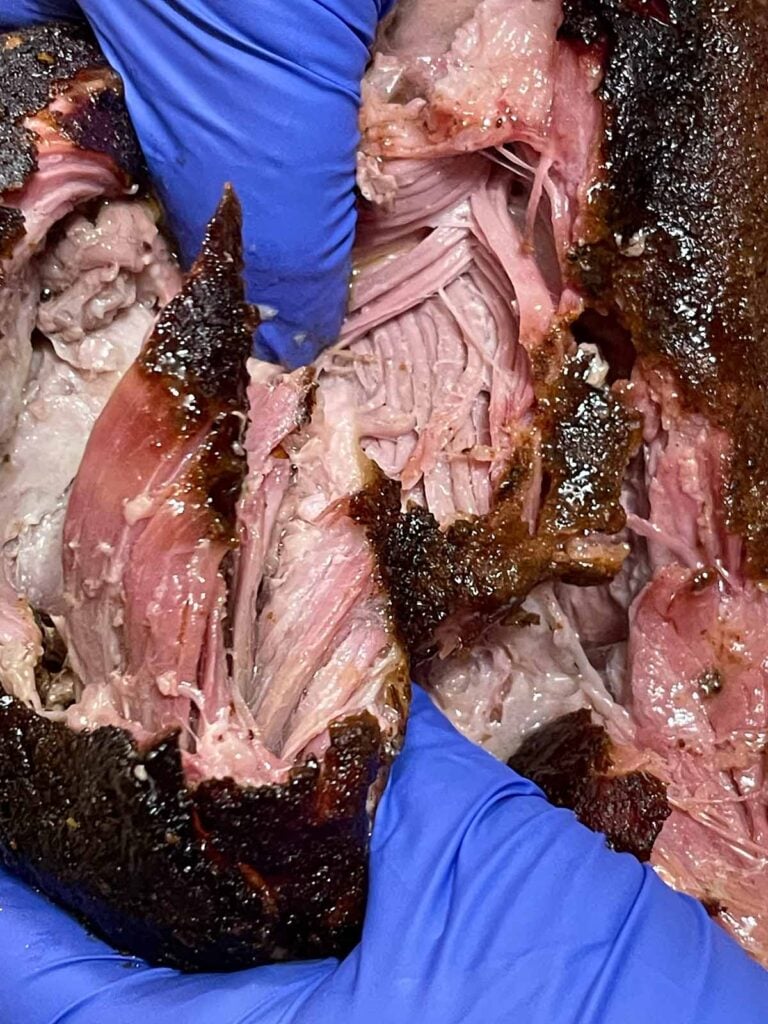
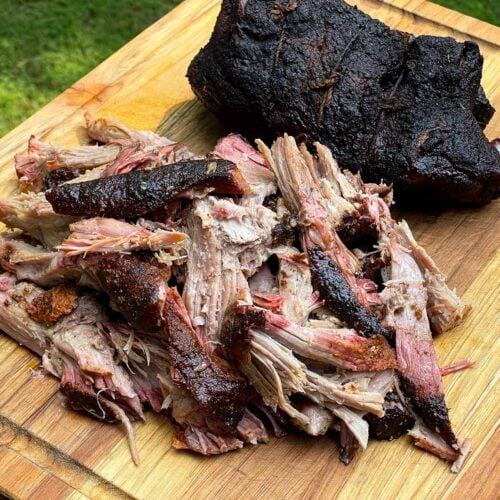
Remove the pork from the smoker and let it rest, still wrapped, for at least an hour. Unwrap the roasts and shred the pork while it’s still warm, mixing the bark throughout for the best flavor in every bite.
Step 5: Serve and Enjoy
Pile the pulled pork onto buns for sandwiches or sliders, or enjoy it alongside your favorite barbecue sides. This smoked pork also freezes beautifully, making it perfect for quick weeknight meals.
If you happen to have leftovers, don’t let them go to waste. We love using smoked pulled pork in Pulled Pork Sliders, Pulled Pork Nachos, Smoked Pulled Pork Hash, Smoked Pork Chili, Redneck Egg Rolls, and even a hearty bowl of Brunswick Stew.
Tips
- Don’t over-trim the fat. Remove only thick pockets and loose pieces of fat. The remaining fat helps keep the pork moist as it cooks.
- Truss loose pieces if needed. If one half unfolds after cutting, tie it with butcher’s twine to create a more uniform shape for more even cooking.
- Cook by bark, not just temperature. Wrap the pork once the bark has developed a deep mahogany color and feels set. The internal temperature is only a guide.
- Probe for tenderness. Start checking around 200°F, but don’t rely on a specific number. The pork is done when a temperature probe slides in with little to no resistance.
- Give it a proper rest. Rest the wrapped pork for at least an hour before shredding. This helps the juices redistribute throughout the meat.
- Save the juices. Don’t throw away the flavorful juices collected in the butcher paper. Mix them back into the shredded pork for even more moisture and flavor.
- Freeze extra pulled pork. Portion leftovers into freezer bags with a little of the cooking juices. They’ll reheat beautifully for quick meals later.
Variations
- Use your favorite BBQ rub. We love our homemade BBQ Rub, but this method works with just about any pork seasoning. Try a sweeter rub, a spicy blend, or a classic salt and pepper profile.
- Skip the mustard binder. If you prefer, use olive oil or a light coating of hot sauce instead. The binder simply helps the seasoning stick and won’t noticeably affect the flavor.
- Smoke it without wrapping. If you have the time, leave the pork unwrapped for the entire cook. It’ll take longer, but you’ll end up with an even thicker, firmer bark.
- Experiment with different wood combinations. We used a mix of hickory and cherry wood for a balance of bold smoke flavor and rich color. Apple, pecan, or other fruit woods are also excellent choices for pork.
- Finish with your favorite BBQ sauce. Serve the pulled pork as-is to let the smoke shine, or toss it with your favorite barbecue sauce before serving.
- Smoke it whole. If you’re not concerned about cook time, you can leave the boneless pork butt whole and smoke it using the same method. We prefer cutting it into two smaller roasts for the extra bark and shorter cook, but both methods produce delicious pulled pork.
FAQs
Absolutely! You can smoke it whole using the same basic method. Sometimes it’s preferable to cut it into two smaller roasts because they cook faster, develop more bark, and are easier to handle.
The mustard helps the BBQ rub stick to the pork and forms a nice crust during the cook. You won’t taste it in the finished pulled pork.
Temperature is only a guide. Start checking for doneness around 200°F, but the pork is ready when a probe slides into the meat with little to no resistance. For us, that was around 203°F for this particular cook.
We prefer pink butcher paper because it helps retain moisture while preserving the bark better than foil. Foil works too, but it tends to soften the bark.
Rest the pork, still wrapped, for at least one hour before shredding. This gives the juices time to redistribute, resulting in more tender and flavorful pulled pork.
Store leftover pulled pork in an airtight container in the refrigerator for up to 4 days or freeze it for up to 3 months. Reheat gently with a splash of the reserved cooking juices or a little chicken broth to keep it moist.
Other Amazing Barbecue Recipes
Smoked Boneless Pork Butt
Ingredients
- 8 lb boneless pork butt
- 2 tablespoons yellow mustard
- 6 tbsp The Rub or your favorite pork rub
The Rub (makes .5 cup)
- 1/2 cup paprika
- 1/4 cup chili powder
- 3 tablespoons kosher salt
- 3 tablespoons black pepper
- 3 tablespoons brown sugar
- 2 tablespoons smoked paprika
- 2 tablespoons garlic powder
- 2 tablespoons onion powder
- 1 tablespoon dried oregano
- 1 tablespoon ground cumin
- 2 teaspoons dry mustard
- 1 teaspoon cayenne pepper
Instructions
- Preheat your smoker to 250°F using a combination of hickory and cherry wood.
- Remove the boneless pork butt from the packaging and pat it dry. Trim away any loose pieces or thick pockets of excess fat, then cut it into two evenly sized roasts.8 lb boneless pork butt
- If one roast unfolds after cutting, tie it with butcher’s twine to create a more uniform shape for even cooking.
- Lightly coat each roast with yellow mustard. Season all sides generously with the The Rub, using about 3 tablespoons of rub per roast (approximately 6 tablespoons total).2 tablespoons yellow mustard, 6 tbsp The Rub
- Place the pork on the smoker and insert a temperature probe into the thickest part of each roast. Smoke until the bark is well developed and a deep mahogany color, about 5 hours.
- Wrap each roast tightly in pink butcher paper, reinsert the temperature probes, and return them to the smoker.
- Continue cooking until the pork is probe tender, usually around 200°F to 205°F. The probe should slide into the meat with little to no resistance.
- Remove the pork from the smoker and let it rest, still wrapped, for at least 1 hour.
- Unwrap the pork, shred it while it’s still warm, mixing the bark throughout the meat. Serve immediately or use in your favorite pulled pork recipes.
Notes
- We used a combination of hickory and cherry wood for this cook.
- Cook to probe tenderness, not a specific internal temperature.
- Cutting the boneless pork butt into two smaller roasts creates more bark and helps reduce the overall cooking time.
- Save the juices collected in the butcher paper and mix them back into the shredded pork for extra moisture and flavor.
- Nutrition information does not include the BBQ rub, as the type and amount of seasoning used will vary from cook to cook.
Perfect!